
Clarence W. Wigington: America’s First Black Municipal Architect and his St. Paul Legacy
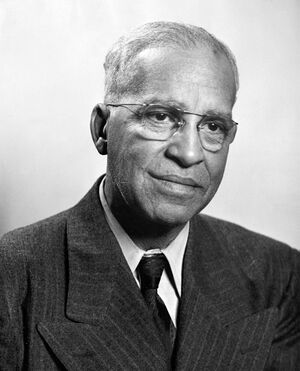
In 1910, the U.S. Census recorded just 59 Black architects, artists, and draftsmen in the entire country. Born in 1883, Clarence Wesley Wigington grew up within the confines of segregation and limited opportunities for African Americans. Yet, without formal architectural training or a college degree, he rose to become the nation’s first Black municipal architect. His vision reshaped the city of St. Paul, Minnesota, and many of his buildings remain a part of daily life for residents. One of his most iconic works is the Highland Park Water Tower.
Early Life and Emerging Talent
Wigington was born in Lawrence, Kansas, to a mixed-race father and a schoolteacher mother. He was one of twelve children in a family that moved frequently in his early years before settling down in Omaha, Nebraska. His artistic skills were obvious early on and at just 15 years old he won the award for best drawing at the Tran-Mississippi World Fair. Two of his elementary school teachers recognized his talent and encouraged him to go to art school, even offering to pay his tuition.
Rather than attend art school, Wigington set out to find a job and secured a position in the office of renowned architect Thomas R. Kimball. The structural engineer and chief draftsman in the office mentored Wigington and by 1908 he felt confident enough to open his own office. Around the same time, he met and married Viola Lessie Williams and created serval commissions for both White and Black clients. The opportunities were limited, however, and the Wigingtons joined others in the Great Migration and moved north to St. Paul.
Building St. Paul: A new Era for the City and for Wigington.
The city of St. Paul was growing rapidly, overwhelming its infrastructure at the same time that residents wanted a city that reflected their prosperity and status as the capital of the state of Minnesota. Widespread corruption had led to a government overhaul that included the creation of the Office of City Architect along with civil service exams to ensure merit-based hiring.
It was Viola who noticed a job posting for the position of architectural draftsman and encouraged her husband to apply. Wigington passed with the highest score and in November 1915 accepted the position of Senior Architectural Draftsman, making history as the first Black municipal architect in the United States. Over the following 34 year career, Wigington worked on over 90 buildings ranging from schools to ice castles for the city’s winter carnivals. Sixty of those buildings still stand.
The 16th Battalion of the Minnesota Home Guard: Finding a way for black patriots to serve their county in a time of segregation.
Wigington quickly became a leader in St. Paul’s Black community and when the U.S. entered World War I on April 6, 1917, he joined other Black patriots in seeking a way they could serve their country. At first the U.S. government refused to induct African Americans into the armed services.
Early in the war National Guard units were called into federal service and the Minnesota Home Guard was organized to protect the home front. Wigington successfully petitioned governor J. A. A. Burnquist to form a separate battalion of the Home Guard for Black Americans and the result was the creation of the 16th battalion, the first Black military unit ever recruited in Minnesota.
Around 500 men enlisted in the 16th battalion and successfully demanded that their officers be men of color. The Black community embraced the battalion, holding rallies and fundraisers to support the men. The 16th battalion band became especially popular and newspapers from the time include announcements proudly boasting that the band would be performing at an event. On Memorial Day the 16th marched in parades alongside White Home Guard units and accounts of the event regularly remark that they received special applause. Wigington became captain of Company A and for the rest of his life, he had the nickname “Cap”.
The Highland Park Water Tower and the architecture of a neighborhood symbol.
With the end of the war members of the Home Guard mustered out and Wigington returned fully to his architectural work. Three of his buildings are now listed on the National Register of Historic Places, and one of his most celebrated designs, the Highland Park Water Tower, has been recognized as an American Water Landmark.
By the late 19th century, elevated water tanks had become essential to municipal water systems. The elevated reservoirs maintained constant water pressure for homesand buildings, in addition to being vital for fighting fires. They are also conspicuous and symbolic structures and the Highland Park Water Tower sits in a highly visible location on the second highest hill in the city.
The Mediterranean Revival style water tower was completed in 1928 and stands 127 feet tall with a 200,000-gallon riveted steel tank. The building cost $69,483, the equivalent of over $1,300,000 in 2025.
The tower is built in three section. The base is 40 feet wide and consists of smoothly dressed, random ashlar Kasota stone. The middle section is built of tan, pressed brick with several windows. The top observation deck is coursed ashlar Bedford stone. The water tower sits at the edge of a large expanse of parkland and from a distance the colors of the different materials blend together into a warm, inviting tan. The doors are solid wood braced with ornate metalwork.
Though the tower is no longer an active part of St. Paul’s water system, it remains a beloved landmark. Twice a year it is open to the public and people stand in long lines to climb the 151 steps to the observation deck. Many people come year after year to make the climb. They take selfies in front of the windows, reminisce about growing up in the neighborhood, or just stand quietly with their thoughts as they take in the view from the top of the tower that Cap built.